



ANIP Benin: between digital promises andrealitieschallenging for users

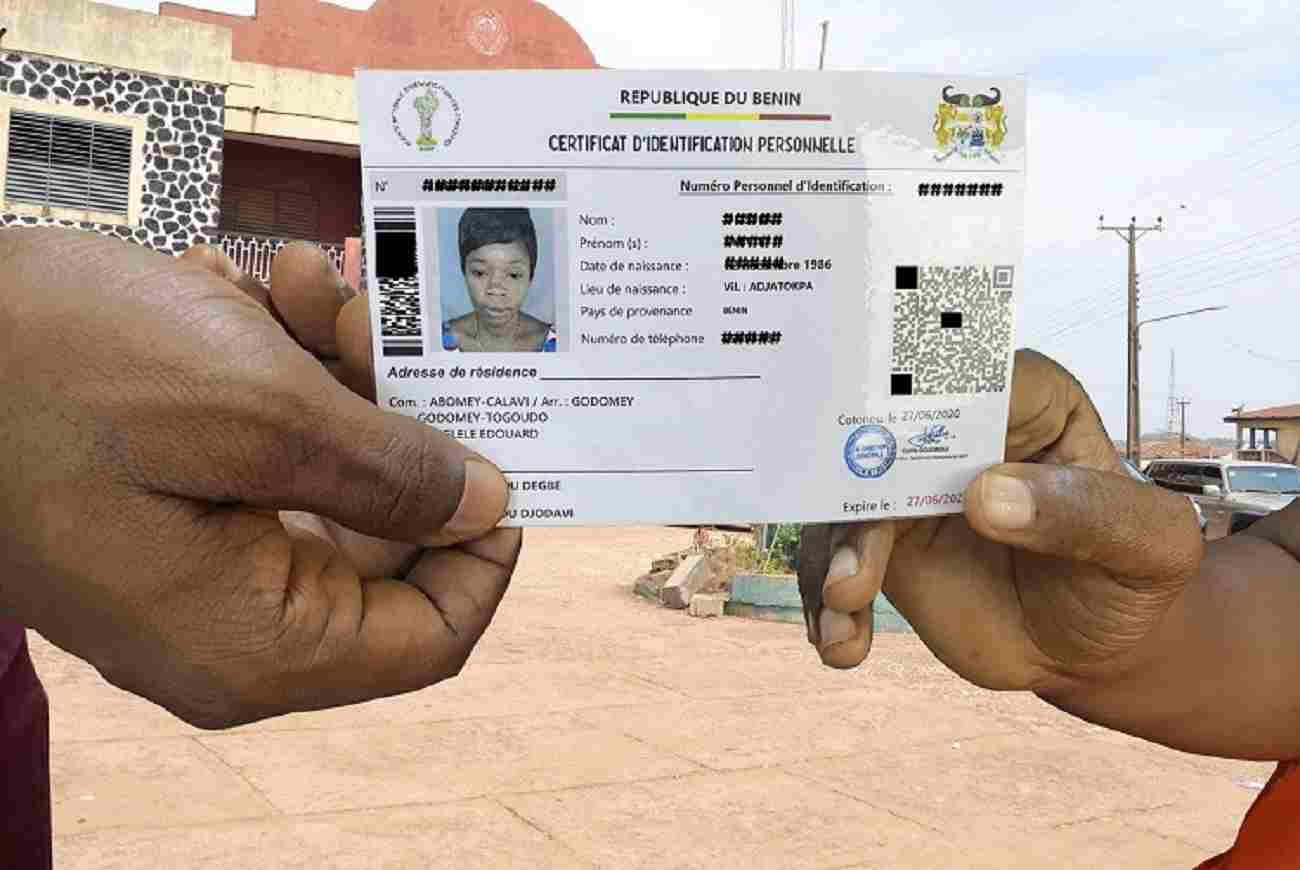
In Benin, the National Agency for the Identification of Persons (ANIP) has introduced innovative tools such as the Personal Identification Certificate (CIP), the biometric card, and the secure birth certificate. These services address crucial needs for identity recognition, access to services, and security.
After 7 years, what is the assessment of the National Agency for the Identification of Persons (ANIP), created by Law No. 2017-08 of June 19, 2017 concerning the identification of natural persons in the Republic of Benin?
A success story in the making at ANIP
Émile Dansou resides in Louakpa, a hamlet in the commune of Ouinhi (115 km northeast of Cotonou). From his place of residence, he accesses the ANIP platforms to obtain his administrative documents.“The introduction of documents issued by ANIP has made it easier for me to obtain documents, especially administrative ones, reduced the costs of obtaining civil status documents, and reduced corruption among some greedy administrative agents.”“That’s a relief,” he says.
Like him, Richie Akuegnon welcomes the digitalization of administrative services. Today, he no longer needs to travel to his village to obtain his birth certificate or criminal record.“I can do it myself, locally and at a lower cost.”he argues.
For Serge Dèfodji, a civil society activist, the National Agency for Identification of Persons (ANIP) has greatly facilitated administrative procedures in Benin. Citizens can now obtain civil status documents such as birth certificates, criminal records, and passports more quickly and securely. This has reduced the risks of fraud and inefficiency in administrative processes.“The documents are more secure, which protects the identity of citizens.”he confided.
Also read:Benin: Endless queues for the correction of administrative documents issued by the ANIP
Indeed, before the Administrative Census for Population Identification (RAVIP) followed by the creation of ANIP, access to administrative services was longer and more complex.
Abègnonhou Sylvain Viahouandé, promoter of the company AS LA LUMIÈRE specializing in digital finance, IT and digital technology, president of the Association of Mobile Money Merchants of Borgou (AsMMo-Borgou) indicated that ANIP has been participating since its creation in eliminating wasted time and long queues in town halls and districts, eliminating the need for makeshift solutions to obtain administrative documents and especially the excessive time it took to issue these documents.
“We are no longer faced with the constraints of physically going to a district or town hall before obtaining administrative documents; the very affordable cost now for an almost automatic service, and the possibility of having these documents even from one’s bed as long as one has internet access and a sufficient balance in one’s mobile money account, as well as the easy 24/7 access to the platform, are all commendable.”
However, despite these undeniable advances which demonstrate ANIP’s commitment to modernizing administrative services, some shortcomings remain, sometimes complicating the user experience in accessing services.
Also read:Benin: ANIP units will be exceptionally open this Saturday, December 28, 2024
Obstacles to the effectiveness of ANIP services
See more
Access the courses
Live channels
Booster in production
This is the case for Serge Dèfodji who often faces connection problems or difficulties accessing dedicated websites.“There are also situations where personal information is not properly recorded or updated, creating complications for administrative procedures.”he added.
He argues that a citizen whose data is incorrect risks encountering problems in their administrative procedures, such as the issuance of a passport, identity card or registration for public services.
Abègnonhou Sylvain Viahoundé often faces difficulties in data protection.“There is a danger that a third party could have someone else’s actions recorded without their consent, especially with our illiterate parents,”he lamented.
At home, difficulties abound.“In the event of a failure of the Anip platform, sometimes the user pays for a service but is unable to download the document, and there is no reliable online support service.”he mentioned.
And digital innovation is reaching its limits at ANIP
To better understand these persistent difficulties, it is essential to examine the underlying causes. These challenges faced by users could be attributed to various structural, technological, or organizational factors that impact the quality and effectiveness of the services offered by ANIP.
Sartunin Houngbadji, a Beninese journalist, gave a brief reminder of the origin of the errors on secure administrative acts.“During the enrollments, particularly the first enrollment between 2017 and 2018, there were enrollment agents who lacked rigor, (…) or there were family names that were misspelled, first names misspelled, birth certificates that were transcribed incorrectly, places of birth that did not match what was written on the birth certificates.”he denounced.
“The other problem that I personally noticed is that there’s a signature issue on birth certificates. I don’t know if it’s automatic during registration, but when the registration officers realize that the person in front of them is having trouble reproducing their signature, I don’t know how it happens, but on several birth certificates, they put the same symbol as a signature in the place where it says ‘holder’.”he points out.
Consequently, users bear the brunt of this because they have a signature they routinely provide. They go to a financial institution to conduct a transaction, naturally they sign, but they are told “no,” you have another signature on your CIP card. However, what is on the CIP card is not their own signature.
The other cause mentioned by Sartunin Houngbadji is related to the problem of telephone numbers.“When we were doing the registrations, there were people who didn’t have a phone number, and there were people who had phone numbers but no longer use them. So, which number does the code to open the document go to? Therefore, if we don’t give people the ability to make updates, there will always be problems.”he explained.
He continues:“Today, if your phone number is not registered with ANIP, or if the phone number you are currently using is not exactly the one registered with ANIP, you can no longer submit applications online. What is the point of asking people to submit applications online if they cannot access the documents and are still forced to go to ANIP to obtain them?”“It’s disheartening,” the journalist lamented.
This situation is all the more disheartening given that today in Benin, documents issued by the ANIP (National Agency for Identification of Persons) are considered legally binding. Increasingly, this is the standard practice for official documents, and when these documents contain errors, they become unusable.
Digital assessment and promises
According to statistics revealed by Benin’s Minister of Digital Affairs and Digitalization, Aurelie Adam Soulé Zoumarou, in an interview with the Ecofin Agency on Thursday, December 19, 2024, more than 210 Beninese public services are fully digitized and accessible via the official platform.www.service-public.bj.
“The ambition we are pursuing today, under the leadership of President Patrice Talon and with the commitment of stakeholders in the sector, remains clear: to position Benin as the digital hub of West Africa. This objective is broken down into several areas. It is not only about becoming a benchmark in the provision of digital services, but also about developing the human skills necessary to support this ambition.”, said the Minister of Digital Affairs and Digitalisation, Aurelie Adam Soulé Zoumarou.
Better still, it intends to work towards a dynamic digital transformation, capable of adapting to future challenges without ever remaining static.“This is a comprehensive approach that we are implementing, in close collaboration with the public sector, the private sector and our development partners.”she explained.
In the course of writing this article, all our attempts to obtain a statement from ANIP have been unsuccessful to date. Officials at various levels contacted have promised to get back to us after receiving authorization from their superiors.
Published onDecember 28, 2024 at 2:19 PM•Updated on May 12, 2025 at 08:27 on BENIN WEB TV By Angèle Adanlé
